

Industrial Pigments & Synthetic Ultramarine: A Complete Technical Guide
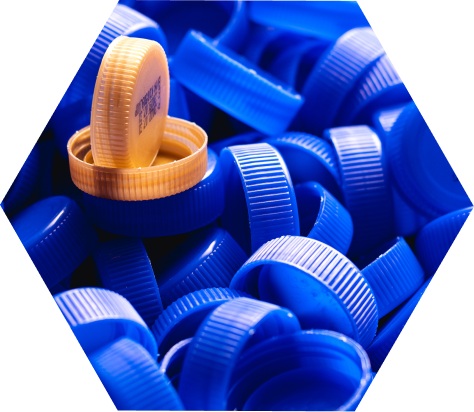
Synthetic inorganic pigments occupy a central position in modern plastics, industrial coatings, and technical inks. Unlike organic dyes and phthalocyanine blues which depend on conjugated carbon ring systems, inorganic pigments such as Ultramarine Blue (Pigment Blue 29 / CI 77007) derive their vivid coloration from complex aluminosilicate crystal lattices.
In industrial masterbatch compounding, thermal stability is paramount. Polyolefins like HDPE and polypropylene are frequently extruded at temperatures exceeding 250°C to 300°C. Standard organic pigments undergo crystal degradation, color shift, or thermal sublimation at these processing thresholds. Heat-resistant grades of Ultramarine Blue withstand continuous processing up to 350°C without color fading or crystal breakdown.
Furthermore, synthetic ultramarine is inherently non-nucleating. Semi-crystalline resins cool isotropically, preserving critical dimensional stability in large injection-molded caps, closures, and industrial crates without the asymmetric warping associated with copper phthalocyanine.
In exterior coatings, synthetic ultramarine provides total alkali permanence, making it completely stable in exterior cement, stucco, and lime plasters where acidic or alkaline moisture would degrade alternative pigments.
Key Technical Takeaways
- Ultramarine Blue is chemically non-nucleating, eliminating shrinkage and warping in HDPE and PP injection moldings.
- Thermal stability up to 350°C in specialized heat-resistant grades and NANOX compounding platforms.
- Total resistance to alkaline environments (5/5 rating), ideal for masonry coatings, concrete, and laundry powders.
Need Technical Testing Samples for Your Lab?
RS Pigments supplies 1kg and 5kg trial sample packs with certified CoA, complete particle size distribution, and FPV analysis.