

Industrial Application Sector

Plastics & Masterbatches

Polyolefin Non-Warping Pigments & High-Heat Engineering Resins
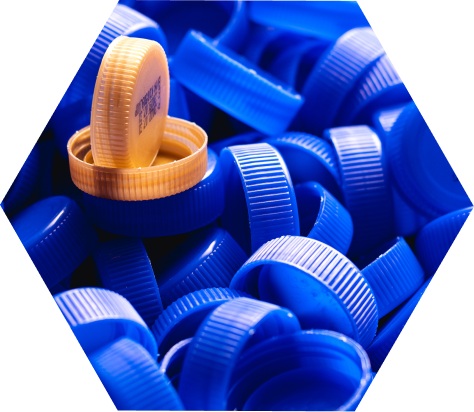
RS Pigments for Plastics & Masterbatches

RS Pigments synthetic Ultramarine Blue, Ultramarine Violet, and NANOX grades provide vibrant, lightfast coloration without inducing polymer crystal nucleation, preventing warpage and dimensional distortion in high-speed extrusion and injection molding.

FDA 21 CFR § 178.3297 (Food Contact Compliant)
EU Directive 94/62/EC (Packaging Heavy Metals < 100 ppm)
EN 71-3 (European Toy Safety Standards)
REACH (EC 1907/2006) Full Registration
RoHS & Halogen-Free Certified
Formulation Advantages

Manufacturing Challenges & How RS Pigments Solves Them

Technical bottlenecks in plastics & masterbatches often result from pigment agglomeration, heat degradation, or resin interaction. Our refined inorganic formulations eliminate these issues.

0 1

Differential Mold Shrinkage & Asymmetric Warping

Industry Bottleneck: Organic blue pigments like Phthalocyanine Blue act as crystal nucleating agents in semi-crystalline thermoplastics (HDPE, PP), resulting in post-mold shrinkage, warped tote boxes, and out-of-round bottle closures.
RS Pigments Solution: RS Ultramarine Blue and Violet are chemically non-nucleating inorganic aluminosilicates, guaranteeing isotropic shrinkage and dimensional accuracy in precision closures and large industrial containers.
0 2

Screen Pack Blinding in Thin Films & Microfibers

Industry Bottleneck: Coarse agglomerates increase filter pressure values (FPV), blinding extruder screens, causing pressure spikes, and causing filament breaks in continuous fiber spinning.
RS Pigments Solution: Our flagship NANOX-FPV grade achieves DIN EN 13900-5 FPV < 0.5 bar/g with sub-micron particle distribution, ensuring continuous melt spinning without screen changes.
0 3

Thermal Degradation at High Processing Dwell Times

Industry Bottleneck: Engineering polymers like Polyamides (PA6, PA66) and Polycarbonate operate between 280°C and 340°C, causing organic pigments to gas off, discolour, and embrittle the polymer matrix.
RS Pigments Solution: RS Heat-Resistant Grades withstand processing temperatures up to 350°C, maintaining spectral reflectance and high tint retention with zero thermal decomposition.

Recommended Pigment Grades for Plastics & Masterbatches

Tailored micronized formulations providing optimal color yield, dispersion ease, and thermal resistance.

Grade Name Target Polymer / Medium Heat Ceiling Performance Benefit Product Page
RS-ULTRA-MB High Tint HDPE, PP Homopolymer & Copolymer Masterbatch 350°C (Heat-Stabilized) Maximum tinting strength, non-nucleating, zero warpage in caps & closures. Specifications
NANOX-FPV Advanced Thin-Gauge Blown Films, PP Spunbond Non-Wovens 350°C (Continuous Melt) Sub-0.1% moisture, low free-sulfur, DIN EN 13900-5 FPV < 0.5 bar/g. Specifications
RS-VIOLET-MB (PV 15) Styrenics, Engineering Resins & Optical Tinting 300°C Unique reddish-violet hue, excellent optical bluing, non-migrating. Specifications
Processing Guidelines

Dispersion, Dosing & Medium Compatibility

Recommended Dosing: 0.005% – 0.05% for optical yellow neutralization; 0.5% – 5.0% for deep solid masterbatches
Processing Temperature Range: 200°C – 350°C (depending on polymer grade and resin residence time)
Dispersion & Milling Recommendation: Pre-blend with polymer carrier using high-speed turbomixers. Twin-screw co-rotating compounding extruders provide optimal shear for complete de-agglomeration.

Compatible Polymers & Substrates

Polyethylene (HDPE, LDPE, LLDPE) Polypropylene (PP Homo & Copolymer) Styrenics (PS, SAN, ABS) Engineering Resins (PA, PC, POM) Rigid and Flexible PVC
Custom compounding formulations and spectrophotometric shade matching available upon request.

Request a Formulation Trial Sample for Plastics & Masterbatches

We supply complimentary 1kg and 5kg laboratory trial packs with lot-specific Certificates of Analysis (CoA) for qualified compounders.